
After our foundation had been established and the first stage of preparing our homepage closed, we kindly ask those who lived in Monor and have old documents or photos connected with the Monor Jewish community to provide copies for us.
On this page we plan to show documents and photos of the old era so that the presentation of the life and story of the Monor Jewish community can be as complete as possible.
Yours sincerely
György Kugel
As a memento of Isaac Pfeiffer
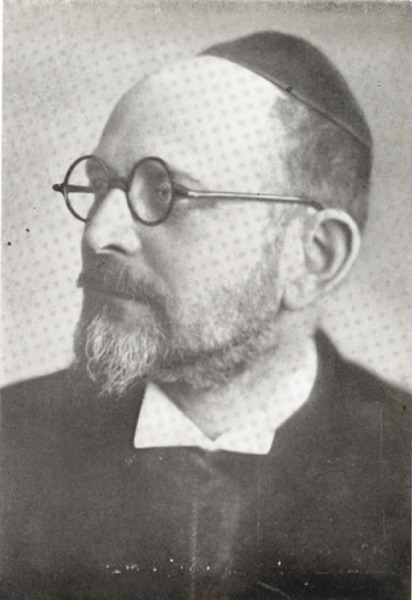 One of the many hundred thousand Hungarian Jewish casualties, and one of the many hundred Hungarian rabbis, who, along with their followers, fell victim to the forces of destruction. His life was wholly that of a dedicated religious leader; he rose above the daily struggles of the common pastor. He was an exceptional person: poet, scientist, rabbi and a veritable true man.
Dr. Sámuel Lőwinger
Click here for more information »
Confession about Isaac Pfeiffer
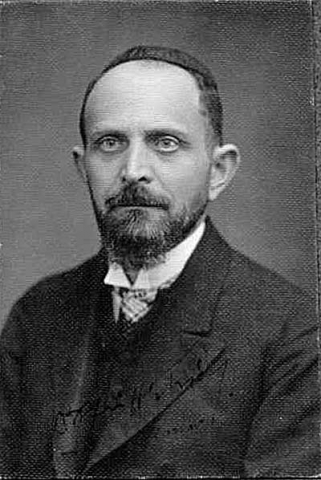 “You, who know my every secret, you’re my secret trusty man” – these two lines of my Father’s poem he wrote to me live in my memory forever…
Click here for more information »
We remember respectfully and thankfully
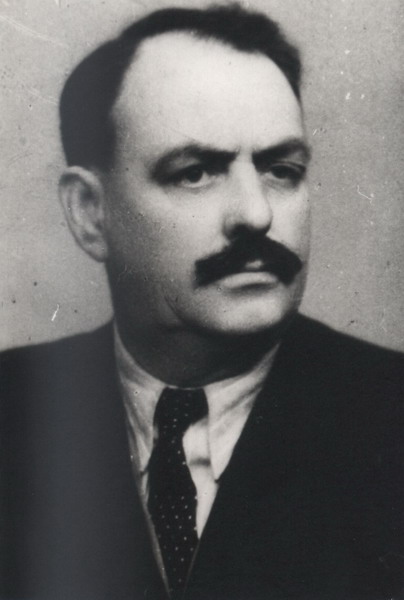 László Dömötör, the commander of forced labour company No. 101/309, who rescued his company with his bravery, humanity and responsibility.
Click here for more information »
Remembrance
Report – by names – about the Jewish victims and few survivors of Monor during the horrible years of World War II.
Click here for more information »
Monor residents who saved Jewish lives
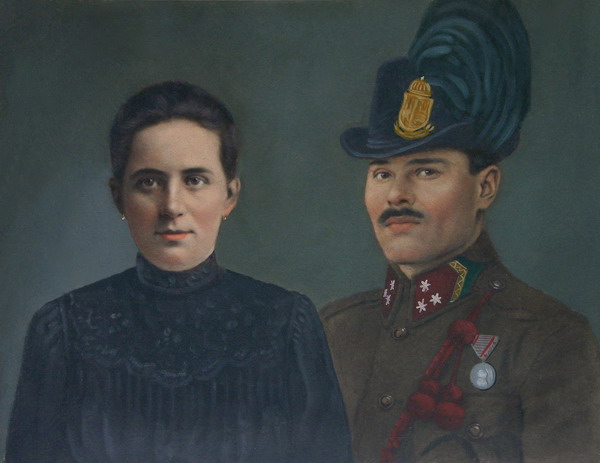 We remember with respect and gratitude those from Monor who helped to save Jews in the Second World War.
Click here for more information »
Anonymous graves in the cemetery
Not only people who lived in Monor rest in the Jewish cemetery of Monor, but also Jews who were deported to the ghetto of Monor from other villages and towns. These people died or took their own lives because of the horrible circumstances and humiliations.
These martyrs rest in anonymous graves; we would like to remember them by mentioning their names.
Click here for more information »
Excerpts from the Golden Album’s foreword
It has been 25 years since the War broke out and 200,000 Hungarian Jews went to battle. 25 years later, after the first “anti-Jewish law” and in the wake of the second one, the Veterans’ Committee was founded under the Pest Jewish Community. The main objective of this Committee’s written programme is to prepare a statistical account of the Hungarian Jewish veterans of the 1914–18 war; to enumerate all those who fought, and sacrificed their life and blood for this Country… So we know about them and know who they were… So that their names are preserved for eternal memory and as examples for future generations!
…May the glorious war deeds of the fathers show a way for their sons in their self-sacrificing love for this Country!…
And all of you, who hold this book, take it and spread it among the comrades, without regard to religion. For our shared past and shared suffering strengthens and ensures our shared future… the future of this land, our dear homeland and the homeland of our descendants, for which to live and work is happiness, to suffer, bleed and die is honour!…
Budapest, March 1940
In honour of the War Veterans of Monor.
Click here for more information »
In commemoration of Katalin Kugel
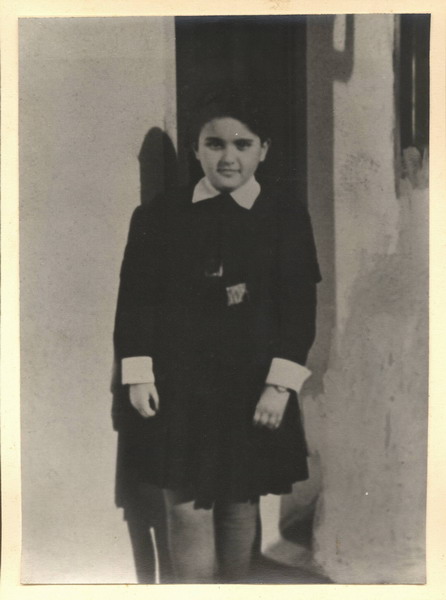 The sorrow of a parent whose child died must be the biggest of all pains. Especially if the child became a victim of the Holocaust. My father never spoke about the terrible loss of his daughter Katalin Kugel.
What I know is a one-time experience from my early childhood: once my father and I were standing at our gate when a young woman greeted us and talked with my father for a while. When she said goodbye and we went into the house I saw that my father was weeping. I asked him what was the matter and this was the only time he spoke about Kati. The young woman had been a friend of Kati when they were small children and lived on the same street.
Kati, her mother and the other women of the family were deported to Auschwitz. My father returned to Monor and there he was told what had happened.
When the deported arrived at Auschwitz and were separated according to their working ability, my grandmother was sent immediately to a separate group. Kati ran to her, embraced her and shouted: I won’t let my grandmother go! Kati wasn’t allowed to go back to her mother and she was killed by gas in the first group. She was 14 years old. Kati’s mother, my father’s sisters, Julka with her husband and son, Margit and her husband did not return.
When my father came back from the forced labour camp he waited for his family to return. When it was certain that they would not come back, he founded a new family. I owe my birth to this.
Monor, 30-11-2005
György Kugel
Letter of thanks to Tibor Koltai from Steven Spielberg
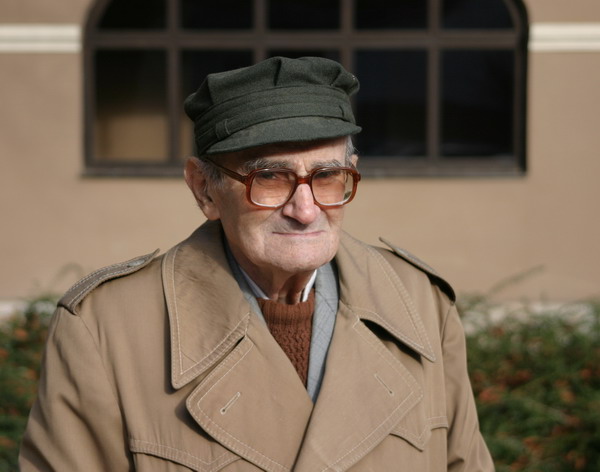 An interview was made by the Survivors of the Shoah Visual History Foundation with Tibor Koltai in 2001.